





 Valorant
 League of Legends
 PUBG Mobile
 Counter Strike 2
 Knight Online
 Mobile Legends: Bang Bang
 Rise Online
 Brawl Stars
 Age of Empires Mobile
 Roblox
 Yalla Ludo
 Free Fire
 Steam
Steam Razer Gold
 Adidas
 PlayStation (PSN)
 Google Play
 App Store & iTunes
 Ace Hardware
 Abercrombie & Fitch
 Airbnb
 AirlineGift
 Allegro
 Amazon
 ALZA.SK
 Applebees
 Refuel
 Ardene
 Argos
Argos AS Roma
 Arsenal FC
 Asda
Asda ASOS
ASOS Athleta
 ASK Italian
 Babbel
 Atrapalo
 Baby Depot at Burlington
 babyGap
 Baja Fresh
 Babel
Babel Bath & Body Works
 B-Card
 Barnes & Noble
 BCF
BCF Banana Republic
 Baskin Robbins
 BDFUGUE
 Beauty BBQ
 Beer52
 Bennet
 BELK
BELK Best Buy
 Biedronka
 Bier Market
 Bimbostore
 Big W
Big W Blaze Pizza
 Blizzard (Battle.net)
 Bloomin Brands
 Bloemen Gift Card
 BirchLane.com
 Book & Gift Card
 Bol.com
 Boots
Boots Boscov's
 BR Guest Hospitality
 Bottega Verde
 Build-A-Bear Workshop
 Bunnings Warehouse
 BWS
BWS BucketlistGift
 Butlins by Inspire
 Buyagift
 Caffe Nero
 Cabela's
 Cabanes de France
 Calzedonia
 Carrefour
 Callaway Golf
 Cap Adrenaline
 CASHlib
 Decathlon
 Deezer
 Domino's
 Flexepin
 Global Hotel Gift Card
 Gocash
 HepsiBurada
 Hotels.com
 H&M
H&M Huawei
 Hotels Gift
 IKEA
IKEA lyft
lyft MANGO
MANGO Marks and Spencer
 McDonald's
 Media Markt
 Migros
 Netflix
 Nelly.com
 Neosurf
 Nike
Nike NBA Store
 Norton
 Paysafe
 Rossmann
 Sephora
 Spotify
 Starbucks
 Subway
 Swarovski
 Target
 Swiggy
 Ticketmaster
 Twitch
 Uber & Uber Eats
 UniPin Gift Card
 Walmart
You found a deal on Robux, VP, UC, Diamonds, or RP that looks way better than the official store - and that’s exactly when mistakes happen. If you’re wondering how to buy game currency safely, the real answer is not just finding the lowest price. It’s knowing who you’re buying from, how the delivery works, what data you’re sharing, and what protection you still have if something goes wrong.
Game currency purchases are fast by design. That’s part of the appeal. You want to top up, queue up, and get back in the match. But speed without checks is where scams, stolen cards, delayed delivery, account issues, and fake support messages start to show up. Safe buying is about friction in the right places - a few smart checks before payment so the rest of the process stays smooth.
How to buy game currency safely without slowing yourself down
The safest buyers usually do three things well. They verify the seller, use protected payment methods, and understand exactly how the currency is delivered before they pay. That sounds simple, but each part matters.
Start with the seller. A legitimate platform should tell you what you are buying, how long delivery usually takes, what region or server restrictions apply, and what happens if fulfillment fails. If those basics are vague, buried, or missing, that’s not a small issue. It usually means the seller expects you to take the risk.
Next is payment protection. If a site pushes crypto only, asks for direct transfers, or wants you to pay outside the checkout flow, back out. A safe purchase should happen inside a secure payment system with visible confirmation steps. You should know what was charged, who processed it, and how disputes are handled.
Then there’s delivery. Some game currency is sent instantly through automated top-up systems. Some is fulfilled by marketplace sellers. Some requires player ID details, while some should never require your game login at all. If the delivery method feels improvised or the instructions ask for more access than necessary, that’s your sign to stop.
Check the seller before you check the price
A discount is only good if the order actually arrives and your account stays safe. Before you buy, look at the platform like a buyer, not just a bargain hunter.
The product page should be specific. You should be able to tell whether you’re buying direct inventory, a code, a top-up, or a player-to-player listing. You should also see the exact amount of currency, any bonus offers, supported regions, and expected delivery timing. Clear product structure usually reflects a real operation with real systems behind it.
Trust signals matter too, but they need to be practical. Security claims should be tied to actual checkout protection, encrypted transactions, and visible order handling. If a platform talks big about safety but gives you no transparent order status, no delivery confirmation, and no support path, the words don’t mean much.
This is where established gaming commerce platforms stand out. A well-built marketplace is not just selling digital goods - it is reducing risk through payment controls, automated fulfillment where possible, and transaction safeguards where human sellers are involved. That operational side is what protects your purchase when things move fast.
Know what information a safe purchase should and should not require
A lot of players get scammed because the request sounds normal in the moment. Someone says they need your full login to send currency. Someone claiming to be support asks for your one-time code. A seller says they need email access just to verify delivery. None of that is normal for a safe purchase.
In most cases, a legitimate game currency transaction should only require the minimum data needed for delivery. That might be a player ID, server selection, username, or email for a digital code, depending on the game. It should not require your password, backup codes, or access to your full account.
If a seller asks for more than the minimum, treat it like a security issue, not a customer service step. Once you hand over login credentials, you are no longer just making a purchase. You are giving someone control.
Payment methods can protect you - or expose you
The best payment method is usually the one that keeps your card details inside a secure checkout and gives you a record of the transaction. That means clear authorization, confirmation, and a traceable payment trail.
Be extra careful with sellers who try to move the payment off-platform after you have already found the listing. This is a common tactic in player markets. The price may suddenly improve if you pay directly, but the protection usually disappears at the same time. If there is no verified checkout flow, no order record, and no delivery confirmation tied to the platform, you have very little leverage if the seller vanishes.
Gift cards can also be a trap in scam-heavy spaces. If someone insists that game currency must be paid for with retail gift cards, that is a major red flag. Legitimate digital commerce platforms do not need awkward payment workarounds to process a simple top-up.
Watch for the red flags that repeat across every game
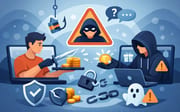
Scams change wording, but the patterns stay familiar. The first red flag is urgency. If the seller says the deal expires in minutes and pushes you to skip normal checkout, they are trying to outrun your judgment. The second is vagueness. If you cannot tell what you will receive, when you will receive it, or what happens if the order fails, you are buying blind.
The third red flag is account risk disguised as convenience. Messages like “we’ll log in and top it up for you” or “send your password so we can complete delivery faster” are not premium service. They are exposure.
The fourth is pricing that makes no economic sense. Deep discounts happen, especially in competitive marketplaces, but pricing that looks impossible often is. If everyone else is clustered around one range and one seller is dramatically below it, ask why. Sometimes the answer is stolen payment methods, fake inventory, or bait-and-switch delivery.
Safe buying looks different depending on the game
Not every title handles currency the same way, so the right safety check depends on what you’re buying. In mobile games, top-ups often use player IDs and server info, which means accuracy matters as much as trust. A typo can send value to the wrong account, and fixing that is not always easy.
In PC and console ecosystems, you may be buying wallet codes, premium memberships, or marketplace items rather than direct currency. Here, region compatibility becomes a bigger issue. A cheap code that does not work in your account region is not a deal - it is a delay and a support ticket.
For player-to-player item or currency markets, the platform rules matter even more. You want visible seller standards, order tracking, and a clear process for confirming delivery. If the marketplace leaves too much to private messaging and personal negotiation, you are carrying more risk than you should.
What to do right after you buy
A safe transaction does not end when you click pay. Check the order confirmation, verify that the delivered amount matches what you purchased, and keep the receipt or order number until everything is complete. If the platform has delivery status updates, use them.
If anything looks off, act fast. That means delayed fulfillment beyond the stated window, partial delivery, duplicate charges, or support messages asking for credentials. The earlier you raise an issue through the official support path, the better your chances of getting it resolved cleanly.
It’s also smart to monitor your payment method after a first-time purchase with any new seller or platform. Most legitimate transactions are fine, but your first order is still the point where trust gets tested.
The safest move is choosing systems, not promises
If you buy game currency often, safety is less about being paranoid and more about choosing platforms built for repeat transactions. Good systems make the right things easy: transparent listings, protected checkout, automated delivery where possible, and clear buyer support when something needs review.
That’s why many players move away from random social sellers and toward structured digital marketplaces. A platform like PLYR is built around exactly that expectation - fast access, protected transactions, and clear delivery flow across multiple games without making buyers trade speed for trust.
A clean purchase should feel simple on your side because the platform is doing the heavy lifting in the background. That’s the standard worth paying attention to.
The best rule is this: if a seller needs confusion, pressure, or extra access to complete the order, it is not a safe buy. If the process is clear, protected, and built to confirm what you paid for, you can power up and get back to the game with a lot more confidence.